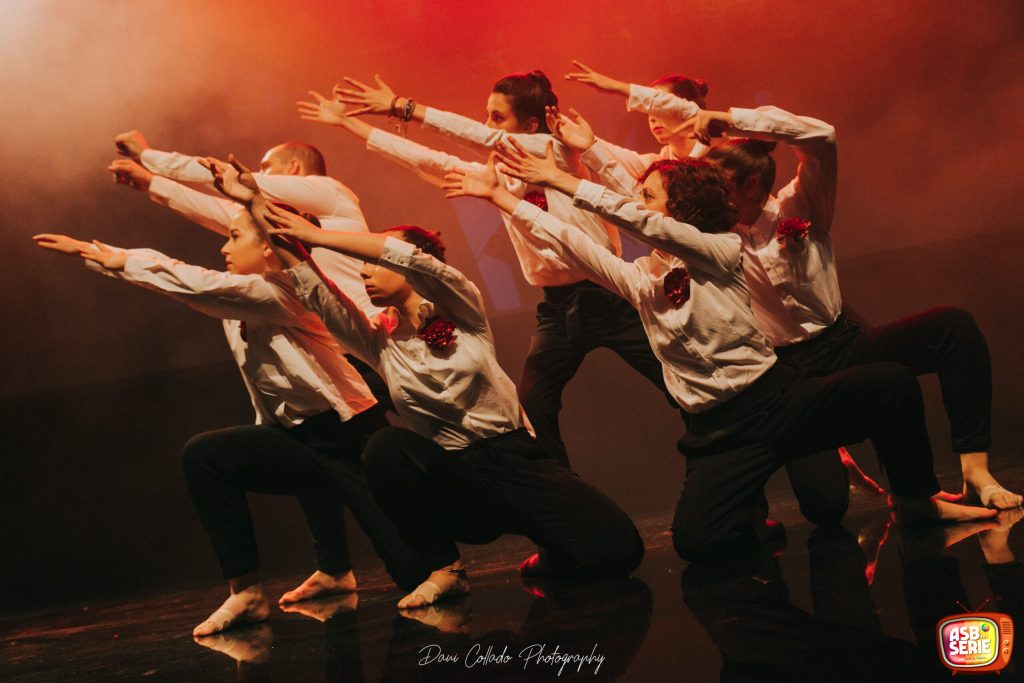
Contemporary dance can be defined as a style resulting from the fusion of others that are based on classical ballet but are free from the rigor of this discipline. Unlike classical dance, contemporary dance allows for freer body expression in terms of movement.
Having good technique is essential to perform modern and contemporary dance at a certain level. Dancers in this discipline must be versatile and able to improvise.
It works with the body’s own weight, gravity, and the variation focuses on the dance floor, on the ground. Contemporary dance is usually performed without shoes, barefoot.
How did Contemporary Dance Emerge?
Its origin dates back to the late 19th century. In the beginning, an alternative to the strict classical technique, also known as classical ballet, was sought. Dancers began appearing barefoot and performing movements less rigid than traditional ones on stage. Over time, variations emerged where classical technique was not the main driver of contemporary development, and movements from other body techniques, such as flamenco, tribal dances, and even yoga, were introduced. Isadora Duncan was one of the precursors in relegating conventional dance narrative, focusing on emotions in favor of exploring alternative sound effects.
What are the Techniques of Contemporary Dance?
To become a professional contemporary dancer or simply to be able to perform it, it is necessary to learn the technique. Learning venues are centers where contemporary dance is taught for beginners, children, adults, or performing arts students. The different techniques that exist for contemporary dance are the Cunningham Technique, the Graham Technique, and the Limón Technique, as well as new modalities arising from the fusion of some of them.
Cunningham Technique
The creator of this technique was choreographer Merce Cunningham. It differs from others due to its autonomy and independent character in relation to music. Space acquired a novel meaning with this technique. Movement is the central axis of this technique above other elements. It randomly mixes previously selected sequences.
This discipline also uses the torso, as in modern dance, moving away from the leg technique followed in classical ballet. Narrativity loses importance, and although it may seem that the choreography does not follow an order, it is based on technique. Actions multiply and occur simultaneously, creativity is freer, and dance is not analyzed; it is simply executed without considering the symmetry and perspective of classical ballet.

Graham Technique
The creator of this technique was Martha Graham. Based on the contraction and relaxation of the body, centered in the pelvic and abdominal area, it coordinates this process with action and the rhythm of breathing. The relationship between the contemporary dancer and the floor acquires considerable relevance.
The torso must concentrate all the contemporary dancer’s attention. It is conceived as a source of life and also as the engine. Each of the emotions or sensations transmitted must first be perceptible in the torso. Martha Graham created and developed this technique after observing how the manifestation of pain and suffering occurred in the human body.
The pelvis is the area where the contraction movement begins, extending to the upper body. The space between the vertebrae expands and must be stretched. The head and neck must remain in line with the spine. When exhaling, the dancer must perform the contraction. When inhaling, each contracted area of the body relaxes.

Limón Technique
Its creator is José Limón. This technique prioritizes fall and recovery, succession, and suspension. It focuses on the movements caused by the act of breathing in the body and uses the dancer’s weight. The movements are oriented towards the development of musicality and dramatic expression. Performers must develop their creativity as much as possible, as it is not a style with specific marked guidelines like the Graham technique. There are no predetermined exercises in this technique.
If you want to learn contemporary dance, you will be welcomed into our professional dance training to begin a journey that aims to understand dance as a space for perception, creation, and artistic expression, contributing to cohesion, inclusion, and the awareness of art and dance as a social vehicle, offering students comprehensive training through different artistic expressions.